On this page
People bring their own expertise to the same toolsWhy CoLand uses a desktop appBe clear about what data the service handlesPreparing to open source CoLandUsers should control the knowledge they build through workThe longer I work with agents, the more I find myself wondering: Who ultimately controls the knowledge accumulated throughout this process?
When I first started using agents, my main concern was whether they could complete the tasks. Later, I found myself bringing more of my own expertise to the work: how to break down problems, how to evaluate results, which requirements needed to be repeatedly emphasized, and under what circumstances I should try a different approach.
This content is gradually being incorporated into prompts, work logs, conversations, and review comments. While it may not yet be perfectly organized, it already reflects many of my own judgments.
For a team, these records may also involve clients, business processes, internal documents, and business decisions. They deserve to be taken seriously.
People bring their own expertise to the same tools
Everyone can use the same models and software, but each person brings different expertise.
Some people have a clear understanding of what a particular type of user truly needs; others excel at evaluating engineering solutions; still others have consistent standards for communication, design, and product experience. These insights often stem from extensive practical experience.
I place particular value on proven experience: what we originally believed, what we tried to achieve, what the results were, and what we ultimately learned.
An untested idea and a lesson that has held up in practice carry different weight. Keeping track of where a lesson came from, when it applies, and how it was tested helps us use it well in future projects.
I hope future tools will help people build this knowledge while retaining control over it. Individuals can manage their own work experience, and teams can decide how internal materials are stored, who can access them, and whether to make them available to a specific model.
This is also why I continue to focus on self-hosted agents and user-controlled work environments.
Why CoLand uses a desktop app
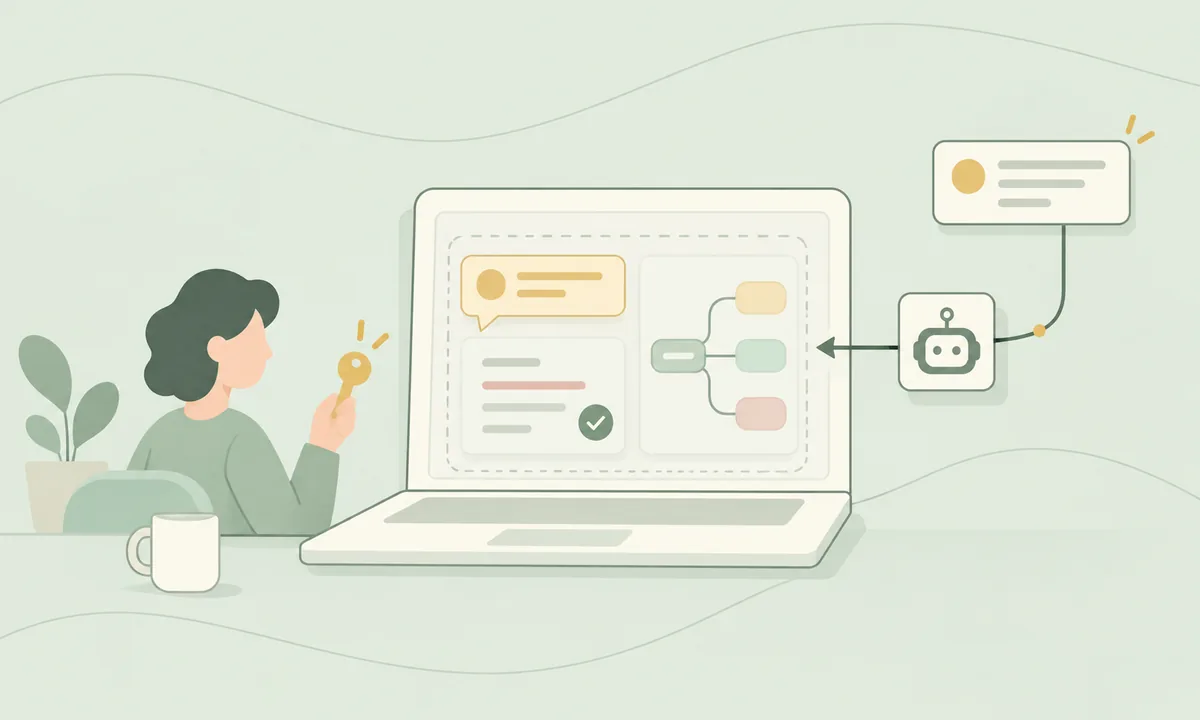
The initial problem CoLand set out to solve was very specific: When feedback appears on a collaboration platform, how can the agent responsible for that task be prompted to follow up on it?
When the agent runs on a user’s own computer, it may not have a public IP address that can be directly accessed by external platforms. The connection service is responsible for receiving and relaying necessary events, and the client then passes the feedback to the corresponding local agent session.
This process requires knowing where the feedback comes from and where it should be sent, but it does not require submitting the entire chat history of the original conversation to CoLand.
The desktop app also lets users connect and configure their local tools. For example, the Feishu application key configured by the user in Desktop is stored locally and used directly to access Feishu. How the agent handles feedback and which models and tools it uses is still determined by the user’s own configuration.
That’s one reason we chose a desktop app: to give users more control over their work environment.
Be clear about what data the service handles
“Not reading historical conversations” does not mean the service does not process data at all.
To deliver feedback, CoLand processes comments, reviews, source details, and the links needed to route them. For delivery, retries, and recovery, the service temporarily stores encrypted feedback. Depending on the delivery method, that content is cleared when the device confirms receipt, the temporary storage expires, or the task ends. Source and status records follow separate retention rules.
The official website also handles the information needed for sign-in, accounts, and authorization. Therefore, summarizing the entire product as “no data is uploaded to the cloud” is inaccurate.
We want to make it clear that CoLand’s current feedback-routing service does not read or upload the agent’s historical conversations, does not make additional AI calls to analyze, summarize, or rewrite collaboration content, and does not use this content for model training.
Whether a user-configured agent calls a cloud-based model depends on the model and service selected by the user.
These distinctions should be made clear. Users need to know what content passes through the service, why it must do so, and how to manage the relevant authorizations in order to decide whether this tool is suitable for their work. For specific details on the scope of processing, see Privacy Policy.
Preparing to open source CoLand
I’ve always loved the open-source community.
Some projects I’ve worked on in the past have introduced me to people with similar needs and interests. We discuss problems and improve tools together, and seeing that my work truly helps others is something that really appeals to me.
CoLand isn’t open source yet. That is a choice I’ve considered carefully.
As models become better at analyzing code, I’ve become more cautious about issues that might have been overlooked in the product’s early stages. A very small team that needs to handle features, permissions, credentials, and data flow all at once can easily overlook certain details.
We have chosen to spend some time first refining the product, clarifying these boundaries, conducting additional testing, and continuing to address issues through real-world use. The fact that the product is not yet open source does not replace the need for secure design; regardless of whether the source code is public, all necessary checks and safeguards must be implemented.
Open source remains the direction we hope to pursue. We will clearly specify which parts we plan to open source and when, once preparations are complete.
Users should control the knowledge they build through work
In the future, we also hope to explore tools that help individuals and teams organize the insights gained through collaboration: which suggestions improved outcomes, which methods proved effective for repetitive tasks, and which principles have been validated through practice.
These records could support knowledge bases, agent workflows, and model evaluation. Users should decide whether to collect and organize them, which material to include, where to store it, and how it may be used.
Currently, using CoLand’s connection feature does not automatically enable this type of data collection. If related products are offered in the future, the scope must be explicitly stated, and explicit authorization must be obtained.
This is a principle we take very seriously when building our product: when an individual brings their own experience to their work with the agent, that accumulated knowledge remains theirs; when a team develops its own methods through collaboration, the team should retain control over how that information is used.
We hope CoLand can help these tasks run more smoothly and give users clear, specific control over the knowledge they build through their work.
For an introduction to CoLand and where we’re heading, watch our launch film.