On this page
An agent that understands the person making the decisionsPeople can review the deliverables directlyA single piece of feedback may affect more than one taskUse feedback to improve this task and future decisionsGive people time to fully think through an issueWhen there is only one agent, the working relationship is usually clear: you assign a task, it provides a result, and you then point out what needs to be modified.
If it starts assigning tasks to other agents, things get complicated. One is responsible for the product proposal, one for implementation, and one for testing. You may need to open several conversations to figure out where each one is in the process, and then communicate a change made in one place to all affected participants.
As the number of agents increases, the workload involved in relaying messages back and forth may also grow. As we explore agent-to-agent collaboration, we keep returning to one question: Where should humans focus their attention to effectively influence the final outcome?
An agent that understands the person making the decisions
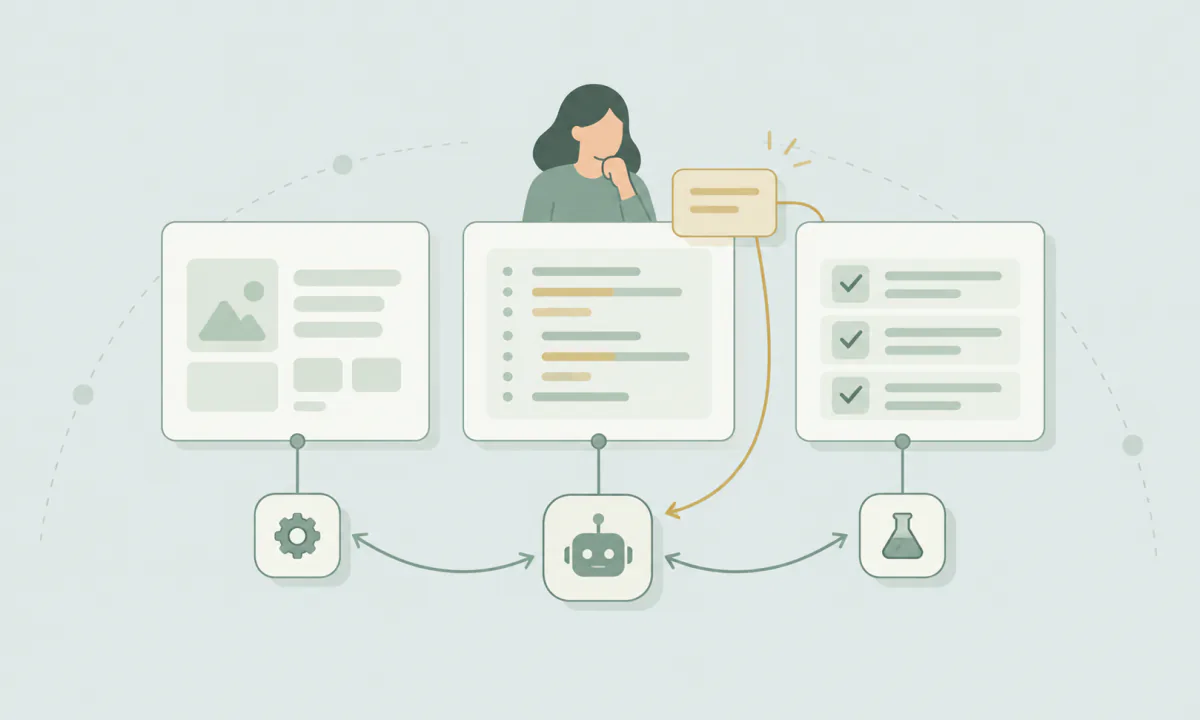
First, let’s envision a division of labor: the person responsible for the work primarily interacts with a decision agent. This agent understands the objectives of the task and is aware of the principles confirmed by the person in charge—such as budget constraints, quality requirements, and priorities in the event of conflicts.
After receiving a task, it discusses requirements and breaks down the work with the agents carrying out the individual tasks. A product agent develops the proposal, a coding agent implements it, and a testing agent checks the behavior. When additional information is needed or dependencies must be coordinated, they can continue their conversation.
There are quite a few things that need to be handled here: how to define the scope of each task, who has the authority to adjust requirements, and who should handle conflicts when opinions differ. These are part of the collaboration methods we are currently discussing; CoLand does not yet provide this multi-agent orchestration capability.
People can review the deliverables directly
Even if agents can divide tasks among themselves, a human still needs to check at certain points whether the work meets expectations. The person in charge may not have time to read every line of their conversations, nor do they necessarily need to know the details of every task assignment.
They can review product documents, design drafts, code, and test results directly. Questions such as whether the target audience is accurately defined, whether the interaction is intuitive, and whether any critical paths have been overlooked can all be raised based on the deliverables.
Colleagues from different disciplines are also welcome to participate. Designers can review the visuals, finance can verify costs, and experienced engineers can review the code. Everyone should contribute based on their area of expertise and provide feedback that helps improve the content.
If someone has a question about a result, they can trace it back to the requirements and earlier discussions. That history needs to remain available, even when everyday reviews begin with the outcomes that matter most.
A single piece of feedback may affect more than one task
Suppose the person in charge reviews the campaign plan and states, “Let’s focus on serving existing users first and postpone the new user registration process.” This statement would affect the product scope and may also impact page implementation and the testing plan.
In our envisioned workflow, feedback should return to the relevant agent workflow. The agent responsible for the solution adjusts the content, the decision agent checks the impact on other tasks, and then coordinates with development and testing to update their respective work.
The person in charge does not need to search through multiple conversations to explain the same decision repeatedly. During subsequent reviews, they can view the updated results and the changes that require their confirmation.
To achieve this, we need to know who is responsible for each deliverable, which task and conversation it corresponds to, and be able to track which participants received feedback and which results have been updated. CoLand is currently linking deliverables to conversations, and we are exploring how those links could support work shared by multiple agents.
Use feedback to improve this task and future decisions
The agent doing the work must complete the current modifications based on the feedback. The decision agent, meanwhile, has the opportunity to further understand why the person in charge made this choice.
For example, if several consecutive reviews have called for narrowing the initial release scope, these requests may reflect a consistent principle: get the experience right for core users, then add features. If the person in charge confirms this, it can be factored into future planning in advance.
However, a specific suggestion may apply only to the current situation. A temporary budget cut cannot be directly turned into a long-term rule, nor can one person’s preference automatically represent the entire team. Which lessons can be retained and to what extent they apply must be reviewed, confirmed, and revised.
We hope that future decision agents will gradually come to understand the person in charge through this calibration process. This process requires clear memory and authorization mechanisms, as well as follow-up tasks to verify whether the agent has understood correctly; currently, CoLand does not automatically extract or learn these preferences.
Give people time to fully think through an issue
The division of labor among multiple agents allows different tasks to proceed simultaneously, but it can also easily overwhelm the person in charge with more status updates, conversations, and decisions waiting for attention. We aim to reduce the amount of information that needs to be manually transferred from one place to another, ensuring that issues requiring judgment are presented with sufficient context.
When the person in charge reviews the proposal, they can think through the objectives and trade-offs without interruption; when technical colleagues review the implementation, they can focus their energy on quality. Once issues are identified, feedback returns to the relevant tasks through the links between the work and its original conversations, so the next round of revisions can begin.
We’re continuing to explore how collaboration between agents can work with human review and calibration. Currently, CoLand is prioritizing the linking of feedback to the original conversation on supported platforms; further design and validation are needed for task coordination, feedback distribution, and learning from collaboration across multiple agents.