On this page
Keep the reasoning behind the final versionA team’s style is revealed in its recurring requirementsLet experience shape the next taskKeep the review criteria up to dateWhat we want to explore nextWhen the same proposal is submitted to different teams for review, it often receives varying feedback. Some teams prioritize return on investment, others focus more on user experience, and still others may raise concerns about implementation risks. Even when everyone uses the same model and faces similar tasks, the final accepted results can vary significantly.
These differences stem from each team’s experience and priorities. Companies want AI to better understand their work—but what exactly should it understand? We believe repeated reviews reveal the standards a team actually works by.
Keep the reasoning behind the final version
A proposal went through three rounds of revisions before finally being approved. Months later, when a new colleague found this document, they could see the final approach but found it difficult to understand why it was chosen: which methods had been tried, which business rules influenced the decision, and which details were added during the review process.
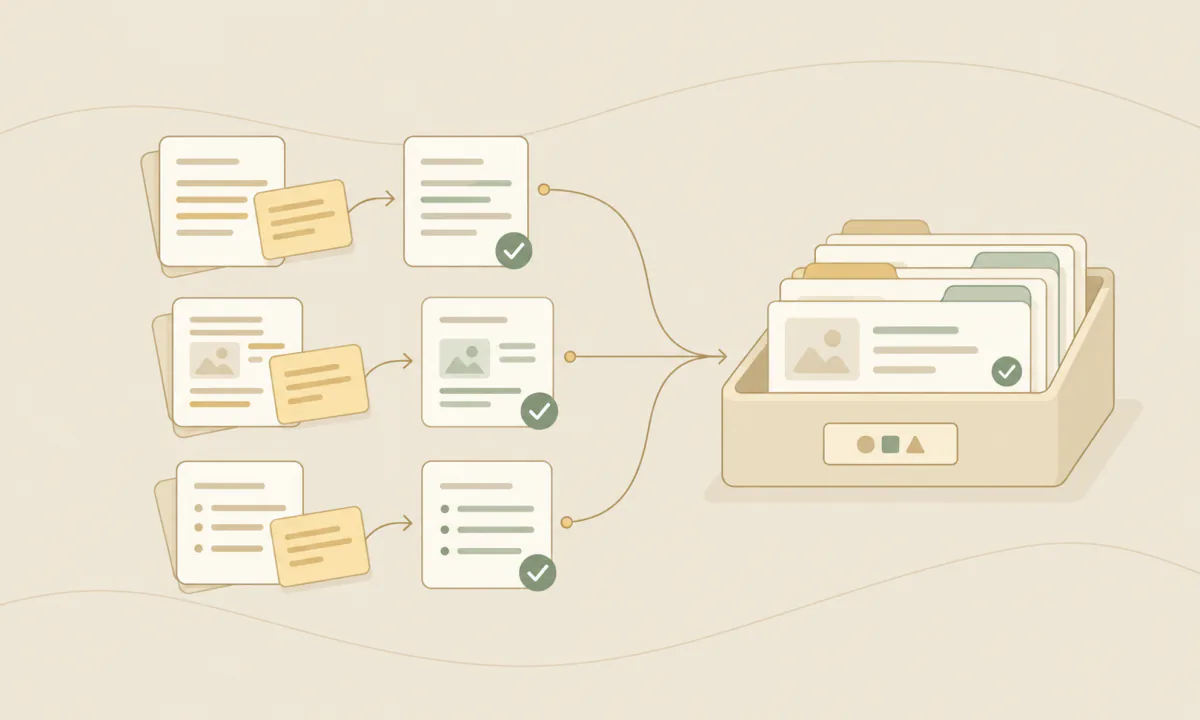
If you compile the first draft, the review comments received along the way, each round of revisions, and the final version, you can clearly trace the changes throughout the process. You’ll be able to see why a particular passage was deleted, why a budget was adjusted, or why a seemingly good plan was ultimately abandoned.
These records can become examples to learn from: What was the task, and what constraints applied? Where did the draft fall short? What feedback did reviewers give, and how did they assess the revision?
A new revision does not always mean better work. Some adjustments apply only to the conditions at the time, and some suggestions may be withdrawn following discussion. When collecting examples, keep the final decisions, including rejected suggestions, and the context in which they apply.
A team’s style is revealed in its recurring requirements
The operations lead may frequently remind you, “Narrow down the target audience a bit more; let’s focus on serving this group of users first.” The product lead may always follow up on exceptions, and the design team may have consistent requirements for information hierarchy and brand tone.
Taken individually, each item represents a specific revision. Over time, certain requirements begin to recur. Together, they reveal the team’s working standards: what kind of phrasing is acceptable, which risks need to be addressed in advance, and what to prioritize when resources are tight.
This kind of expertise is often held by a small number of senior colleagues. They use it during every review, yet find it difficult to set aside the time to compile all their insights into a comprehensive manual. Everyday collaboration already provides examples. Organizing them can help new team members and agents understand the team’s standards.
Over time, these decisions can become a useful record of how the company works.
Let experience shape the next task
One approach worth trying is to organize confirmed requirements into guidance for the agent. For example, check the budget requirements before submitting campaign plans, ensure product descriptions cover edge cases, and make sure external copy adheres to the team’s approved writing style.
Another use case is to retain representative examples of revisions. When encountering similar tasks, the agent can refer to the original draft, reviews, and results to understand how a specific requirement is applied in practice. Teams can also use these examples to evaluate the new model: given the same draft, can it identify issues that have already been pointed out by professional reviewers?
If the quality, quantity, and licensing of the sample data are appropriate, you may also explore model training or fine-tuning. Different use cases require different approaches to data preparation, and effectiveness must be verified through actual tasks.
We want lessons the team has tested in practice to help with the next task. As common issues decrease, the quality of first drafts will become more consistent, and reviewers will be able to focus their time on new problems and more challenging trade-offs. This is our long-term vision for enterprise AI workflows.
Keep the review criteria up to date
Should a single manager’s preference become a universal requirement for the entire team? Do rules that applied six months ago still hold true today? These questions need to be continuously reevaluated as experience accumulates.
Therefore, samples should ideally indicate who made the suggestion, which task it concerned, and whether it was ultimately accepted. Teams should be able to revise outdated requirements and distinguish between personal preferences, professional expertise, and shared company principles.
The value of this material is closely tied to the company’s business, and the decision to collect and use it should rest with the company itself. Access permissions, storage locations, and permitted uses must all be clearly defined.
What we want to explore next
Currently, CoLand connects collaboration feedback to the agent’s original conversation. Enterprise datasets, knowledge bases, and the use of review experience for training or agent constraints are areas for future exploration; these product capabilities are not yet available.
CoLand’s current feedback-routing service does not read agent chat history, does not make additional AI calls to process feedback, and does not use collaboration content for model training. Encrypted temporary storage used to deliver feedback has independent cleanup rules; see Privacy Policy for details. Any future enterprise data product would require separate, explicit authorization. Connecting CoLand today does not enable those uses.