On this page
The first draft still needs a reviewReviewers are concerned with whether the code worksKeep your attention on the PRSend review feedback back to the original conversationComplete one round of revisionsAfter an agent finishes writing the code, it submits a PR. The reviewer looks over a few changes and leaves a comment: “We also need to consider data from older versions here.” Next, someone usually has to copy this sentence back into the chat window, explain which file it refers to, and then ask the agent to continue making changes.
Handling one or two pieces of feedback is manageable. But when discussions multiply, summarizing them becomes an extra task: someone has to keep track of which changes have already been made, which are still awaiting confirmation, and which pieces of feedback have since been resolved. CoLand aims to streamline this process first.
The first draft still needs a review
An agent can quickly produce a first draft for the team to discuss. Review often brings out requirements that were not obvious at the start: an API must support older clients, an edge case needs more tests, or an implementation that seems reasonable overlooks a business exception.
Different team members know different parts of the system, so it is hard to write down every requirement before work begins. It’s easier for everyone to point out issues after seeing the actual results. A single comment below a line of code can often clarify things.
You can review this code yourself, or invite a more experienced colleague to conduct a code review. They may be familiar with the system’s history or better equipped to spot performance or security issues. They can spot issues the agent missed in the first draft.
Reviewers are concerned with whether the code works
The reviewer usually doesn’t need to read your entire chat history with the agent. They’ll open the PR, review the scope of changes, implementation, and tests, and then offer feedback based on their own experience.
“This API is still being used by older clients.” “If this step fails, the earlier data has already been written.” “This approach will cause issues with large data volumes.” Each comment refers to a specific part of the code and explains a concern. By keeping discussions alongside the code, other participants can review and contribute together.
Requiring a reviewer to join another chat and read how you explained the requirements to the agent would make it harder for them to participate. Keeping the discussion on the code lets everyone contribute their expertise.
Keep your attention on the PR
Your focus changes once you submit a PR. Before that, you work with the agent to clarify requirements and try implementations. During review, you inspect the changes, respond to comments, and decide which revisions are needed.
In practice, however, you’ll constantly have to switch away from this screen. You’ll see a comment, switch back to the agent’s chat, paste your feedback, and add context; once the changes are made, you’ll return to GitHub to verify them. Another discussion you were halfway through reading gets interrupted just like that.
Copying a piece of text takes only a few seconds, but picking up your train of thought often takes much longer. You need to recall what the reviewer is concerned about, where this change will have an impact, and what other details you haven’t confirmed yet. Repeatedly switching tools during a review cycle takes time and breaks your concentration.
Send review feedback back to the original conversation
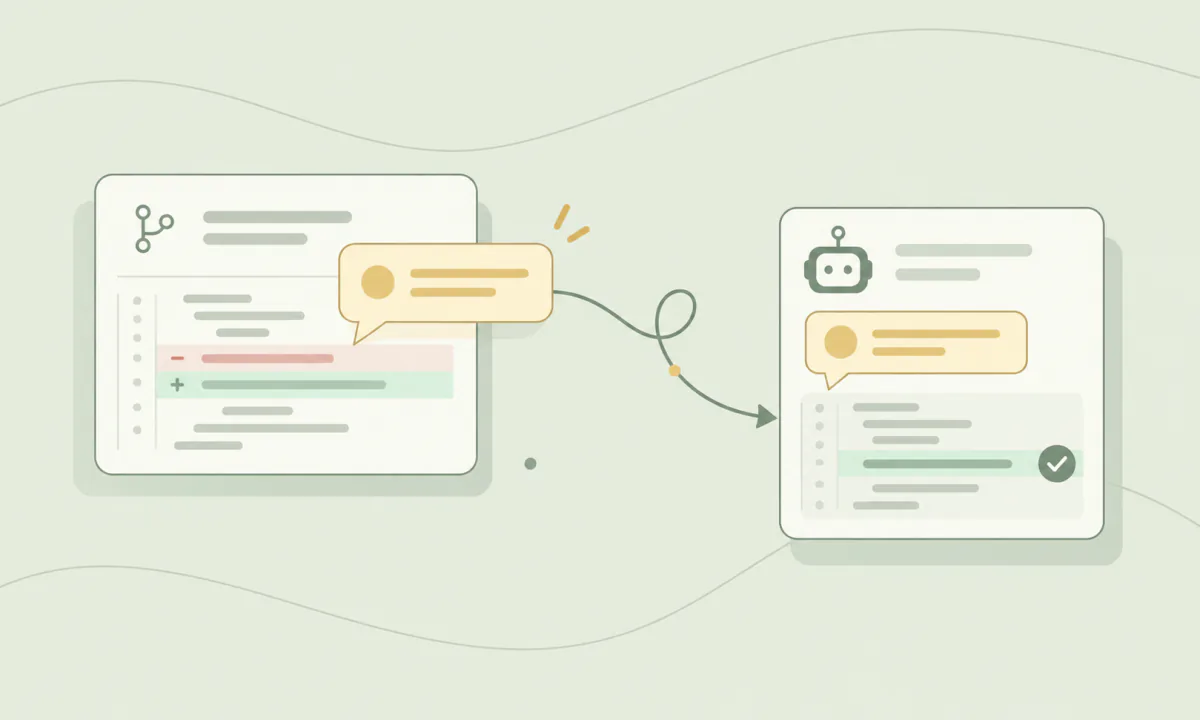
CoLand sends feedback, its source, and the context needed to understand it back to the agent conversation where the code was written. Since the previous requirements and discussions are already there, the agent can continue the work, and the team can continue reviewing the changes in the same PR.
For example, a colleague points out a compatibility issue with legacy data in a particular section of code. After this feedback is sent back, the agent can update the code and add tests based on the original implementation. You can then review the changes to confirm whether the issue has been resolved; reviewers can also continue to add comments to the original discussion.
This removes the need to relay each comment yourself. Decisions regarding whether modifications are appropriate or whether code can be merged will still follow the team’s original workflow. The agent’s actions after receiving feedback must also adhere to its existing configuration and permissions.
Complete one round of revisions
We want the process to be straightforward: a colleague points out an issue next to the code, the agent responsible for implementation makes the necessary changes, and everyone returns to the same PR to review the changes. Participants can focus their energy on understanding the problem and evaluating the outcome.
The workflows described here use GitHub PRs, Feishu Docs, and OpenClaw. Feedback delivery depends on the desktop app being online, the required platform permissions, and the work being linked to a conversation. Check the desktop app for the integrations available in your version.
Start with a small PR, invite a colleague to leave a comment, and then go through the changes based on that comment. You’ll find it easier to see how this process can save time on back-and-forth communication in your daily work.