On this page
More parallel work also creates more coordination workLeave feedback where you see the resultTeam collaboration should not depend on one person relaying messagesOrganize a scattered work environmentOrganize external information tooMake collaboration easier, then learn from the decisions people makeThe previous article set out several connected expectations: agents will handle more work, personal and organizational AI environments will grow more complex, and human time and attention will limit parallel work.
That determines CoLand’s current focus: reduce the coordination needed to keep work moving, so people can keep their attention on the work in front of them and the decisions that matter.
We’re tackling two problems: passing feedback between tools, and keeping track of which agent is responsible for each task and which conversation and device it uses. This includes finding the right conversation, supplying context, and tracking responses.
CoLand records those connections so people don’t have to keep them in their heads.
Following the same goal, we are also designing an extension: organizing reading, learning, and notifications outside work, so external information can enter a person’s knowledge and workflow more easily. We call this the Event Network, discussed below.
More parallel work also creates more coordination work
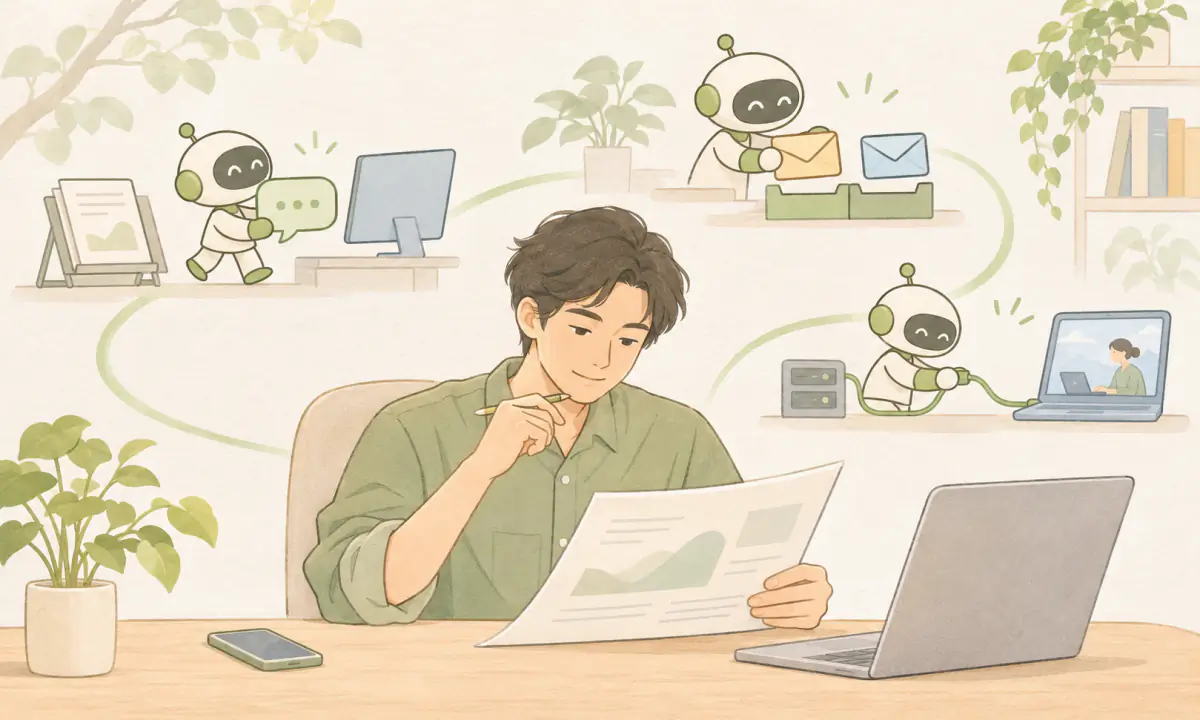
One agent changes code, another drafts a proposal, and a third organizes research. They can work simultaneously, but feedback on their deliverables may arrive separately in GitHub, documents, and other platforms.
A person must identify the task behind each comment, then find the responsible agent, conversation, and device. Even a clearly written comment often has to be turned into another instruction before the agent can continue.
Each action seems small on its own. Its real cost comes from interrupting work that needs continuous thought.
While reading a design proposal, I notice something that does not make sense. Instead of simply commenting on the paragraph, I leave the document, open a conversation list, identify the task, and send the feedback. When I return, I have to find where I stopped and recover what I was thinking about.
The later feedback arrives, the harder this becomes. Someone reviews a document written several days ago; several similar proposals created on one day are difficult to distinguish by conversation titles alone. More tasks mean more relationships for a person to remember.
The decision has already been made. Someone still has to pass the feedback on. That is the work we want to remove first.
Leave feedback where you see the result
Code review is a straightforward example. In GitHub, I see code that deletes a shared project without asking the user to confirm. I comment at that location: “Ask the user to confirm before deleting.”
The comment already explains what needs changing. I want to keep reviewing while the responsible agent handles it.
CoLand starts by linking a deliverable to its original conversation. In supported workflows, when an agent creates or takes responsibility for a deliverable, the system records the agent, device, and conversation responsible for it. CoLand can then use that link to send feedback back to the original conversation.
People do not need to answer “Who made this?” or “Which window should I open?” again. The agent receives the comment, its location, and a reference to the work in the original conversation, so it can continue with the context already there.
The original conversation matters because the earlier discussion is still there: why we chose this implementation, which constraints were confirmed, and which alternatives were rejected. All of that may be needed for the next change.
CoLand preserves the relationship and delivers feedback; the original agent still performs the work. After the change, people review it in the same PR or document. Delivered feedback, work in progress, and a verified update are different states. People need to be able to tell them apart.
People keep reading, judging, and accepting results; the system locates and forwards the feedback.
That is where returning feedback to the original conversation fits into the product: it is one way to reduce the need to switch between tools.
Team collaboration should not depend on one person relaying messages
The same problem appears in teams. I work with an agent on a campaign plan and send it to a manager. The manager cares about prizes and budget, without needing to know which local agent I used.
If the manager comments “Cut the prize budget in half,” I previously had to notice the comment, find the original conversation, and relay it. That interrupts my attention, and the change waits until I am available.
With several participants, forwarding becomes an exercise in gathering feedback. One colleague proposes a change, another supplies context, and a manager confirms the final approach. Someone must participate in the discussion and then assemble the scattered information for the agent carrying out the task.
We want the discussion to remain beside the deliverable. Its comments, replies, and confirmed conclusions should follow the established relationship into the responsible conversation. The agent can see the source and location of feedback, while collaborators can inspect the changes where they already work.
Human judgment is still needed. Conflicting comments often require a choice based on the team’s goals. The responsible person can state the conclusion in the discussion, and the system delivers it.
We want to reduce the work of collecting, copying, and relaying feedback, so people can focus on the discussion itself.
The same division applies when collaboration extends to customers, external partners, and open-source contributors. They can use familiar platforms without joining our agent tools or understanding the execution environment behind them.
- Solid line:Deliverables
- Dotted line:Feedback
Organize a scattered work environment
As agents multiply, the problem expands from a few chat windows to an entire work environment. Coding may happen on one computer and research on another. Some tasks use local models; others call remote services. Deliverables live in repositories, document systems, and spreadsheets.
Users need to maintain more than a tool list. They need to know which agent on which device is responsible for which work. That relationship determines where a new notification should go.
CoLand’s current development therefore centers on four kinds of objects: collaboration sources, devices, agents, and deliverables. Changes from different sources can enter a shared management system as events, then follow the deliverable relationship to the right execution environment.
A GitHub comment and a document comment have different content, but both need a source, location, associated deliverable, and processing status. Events connect that scattered information and reduce the need to inspect and interpret each platform separately.
This explains why we are connecting more collaboration platforms while expanding agent support. Connecting only message sources still leaves a person to forward them to the agents doing the work. Connecting only agents leaves them disconnected from external collaboration. One system needs to maintain the relationship between both sides.
For supported connections, users can inspect connections and event records to understand whether feedback arrived, which environment should receive it, and whether anything needs attention. They can check those details in one place.
We’re expanding the range of platforms, devices, and agents CoLand can connect. We plan to use the same approach as we add more devices and notification sources. We want an environment that can keep expanding without management effort growing at the same rate as tools and devices.
Organize external information too
Work collaboration is only one source of interruption. When I find a research paper worth studying, I may leave the website, find my research agent, and explain the link and my questions again. After watching an interview, I need to extract the useful ideas and discuss their relevance to my work with AI.
The information is valuable, but turning it into usable knowledge still takes collection, filtering, organization, and forwarding.
We’re designing the Event Network and preparing it for launch. It will connect incoming information with a person’s knowledge, tasks, and agents, so relevant context can be organized before they need to review it.
An entry point could be a deliberately shared paper or video, or a bookmark, email, or application notification where platform integrations permit it. We want people to hand content to the right agent where they discover it, continuing existing research or work.
A 40- or 50-minute interview might contain only a few ideas worth further study. Other parts may be familiar or already put into practice. A chronological summary still leaves me to filter them again.
We envision AI drawing on a user’s saved knowledge, discussions, and notes from putting ideas into practice. It could identify repeated information and retain new insights, ideas that challenge existing assumptions, and approaches still worth testing. Sources and key excerpts should remain available for follow-up and review.
The organized material can also suit the person’s learning style. A complex idea can become a diagram, a method can become a presentation, and differences between approaches can become a visual comparison.
The result is material better suited to understanding and discussion. Our goal is to reduce the time spent watching and filtering, so people can focus on what is new.
Bookmarks can also start a learning process. Where integrations can detect saved bookmarks, one action could trigger background analysis: what the content says, which current task it relates to, and whether it suggests an improvement worth trying.
After discovering a new user-interview method, for example, AI could connect it to an ongoing study, explain how it differs from the current approach, and suggest a small experiment. Through discussion and practice, the user can decide what belongs in their knowledge base. External information has a path into actual work instead of stopping at a bookmark list.
Email and routine notifications can follow the same pattern. AI first identifies the related task. Tasks covered by existing agreements and permissions can go to the appropriate agent. Questions that need a new decision can reach a person with the context and implications already laid out.
This design will work with the next stage of decision-making capabilities, gradually reducing the need to switch tools just to check and forward messages.
- Solid line:Events & tasks
- Dotted line:Results & updates
We want people to spend more time exploring unfamiliar ideas, discussing disagreements, and putting ideas into practice, while the system handles repeated filtering and forwarding.
Collaboration at work and reading, learning, and notifications outside it all draw on the same limited attention. The Event Network explores how to organize those external demands too.
Make collaboration easier, then learn from the decisions people make
At this stage, we start by reducing manual feedback forwarding and repeated switching: leave instructions beside the result, remove the need for one person to relay team discussions, and organize scattered platforms, devices, and agents. Each approach reduces coordination effort and helps reading and thinking stay continuous.
Reading, learning, and notifications outside work also compete for attention. The Event Network will extend our work in that direction. Once the information is collected, we still need to decide what matters, what we can handle using what we already know, and what calls for a new decision. Helping with those choices will require agents that understand us better.
The next step is to study how a decision agent can better understand our requirements, gradually make routine decisions within agreed limits, and bring new questions back to us for discussion and learning. The shared goal is to concentrate limited attention on new, important things.
Next: Product Notes: Decisions Are the Most Important Asset. We will explore how experience recorded through collaboration can inform decisions, remain under our control, and continue working for us.